










Muhammad al-Nimr, 10, had been at home with his family when Israeli soldiers came knocking on the door to evict them. They were told their house was an illegal construction and it was to be destroyed within the hour. When asked how he felt about Israelis as he watched his family home being demolished there was no hesitation in his response, “I hated them, I despised them, I wanted to kill them!” As he stood watching the team of volunteers from the Israeli Council Against House Demolitions (ICAHD) rebuild the family home some remnants of trust seemed to have been salvaged, “we see that they are not all the same. There are some who destroy and there are some who build”.
ICAHD’s founder, Jeff Halper, is an Israeli Jew who strives as an academic and activist to challenge the status quo of Israeli society. He reasons, “Israel cannot have security through military means. You can’t have security with walls, and occupation, and house demolitions, and everything else. The only security for Israel in the long run is through peace”. He adds as a note of caution that even the word ‘peace’ can be misleading. Peace doesn’t just mean peace and quiet. If it is to prevail then it has to compose a just and lasting political solution.
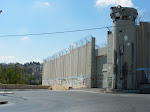
If a real political settlement is ever to be made then he believes that the ‘matrix of control’ needs to be dismantled. This may sound like some dodgy computer animated film with wooden actors and a series of spin off computer games but what it refers to are the instruments of the occupation such as the settler only roads, the forced evictions, the house demolitions, the ID cards, the separation wall and the checkpoints which collectively control virtually every aspect of Palestinian life. The idea that I was making my token contribution towards dismantling the ‘matrix of control’ provided some solace as I stood dripping with sweat mixing cement for the al-Nimri’s new home.
Selim Shu Amery is a resident in the same area who has had his home demolished four times, and sure as night follows day he has rebuilt it every time. It is evident from speaking to him and others in the community that these individual acts of defiance are powerful forms of passive resistance. Despite the Israeli obligation under the 4th Geneva Convention to protect the citizens it has been illegally occupying since 1967 most Palestinians can’t help but feel they are being squeezed off the land. With over 24,000 house demolitions since 1967, the forced evictions, the expropriation of land, the uprooting of over 1.5 million trees and the construction of the separation wall it’s easy to see why. To keep on building is to keep hope.
For those Palestinians who ICAHD works with to rebuild their homes it is of symbolic, practical and personal importance to have Israelis in their corner. Selim explains, “ICAHD works hard to take [away] the cover of the demolitions…it’s not that Palestinian’s don’t like to get building permits, it is the Kafkaesque system which is used by the Israeli occupation system, pushing Palestinians inside their villages, inside their cities so the land will be empty for the occupation purposes”. Whilst Jeff is the first to admit that ICAHDs activities are on the fringes of Israeli society he nonetheless reaches out to engage his fellow nationals. The value of these efforts is not lost on Selim, “hundreds of the Israelis are coming to support us in the rebuilding. Hundreds are coming to our home here in al-Arabiya to talk about the house demolitions. Can you believe a lot of these Israelis don’t realise their government is an occupier? Then when you tell them and speak to them they become shocked. I hope these people who come here can spread in the Israeli community and talk about our situation here”.
Although ICAHD does work to engage its fellow Israelis they put more faith in influencing the international community. But why would outsiders to the conflict be more inclined to get involved and show an interest? “First of all I would hope the very merits of the situation mean something to people. These are violations of human rights, they’re war crimes, they’re crimes against humanity, oppression, injustice. People should care about that” was Jeff Halpers initial response. Considering his cynical attitude towards Israeli society this seemed like a slightly idealistic expectation of the rest of us. Luckily he continued on a more pragmatic path, “people have to understand that this is a conflict that is destabilising the entire global system…you’re civil liberties in the UK are being compromised by this conflict”. Maybe there is some truth in that old adage, ‘if you’re not part of the solution, you’re part of the problem’.

